The International Monetary Fund (IMF) has raised concerns over the financial impact of Ghana’s Domestic Gold Purchase Programme (DGPP), saying the rapid expansion of the programme in 2025 resulted in significant losses for the Bank of Ghana (BoG).
According to an IMF analysis published in August 2026, the programme recorded losses of more than US$1.7 billion in 2025, equivalent to about 1.5% of Ghana’s GDP. The Fund said almost all of the losses were linked to the purchase of doré gold under the Gold-for-Reserves (G4R) initiative.
The IMF explained that the losses were associated with several factors, including service and assay fees, discounts on gold sold to off-takers, trading losses and foreign-exchange effects arising from the programme’s pricing and accounting arrangements.
Despite the substantial financial losses, the IMF acknowledged that the programme played an important role in rebuilding Ghana’s international reserves and supporting foreign-exchange market stability during the country’s economic crisis.
The development has renewed debate over the financial sustainability of the gold purchase programme and the extent to which the central bank should be exposed to commercial and quasi-fiscal risks.
The IMF has previously recommended that losses associated with the Gold-for-Reserves programme be reflected on the national budget’s balance sheet rather than being absorbed solely by the Bank of Ghana, alongside stronger transparency and risk-management measures.
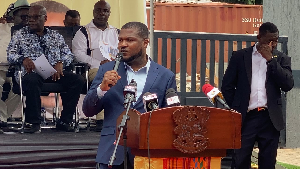
Meanwhile, GoldBod CEO Sammy Gyamfi has disputed attempts to attribute the reported US$1.7 billion loss directly to GoldBod. He has argued that GoldBod’s role was primarily to purchase and aggregate gold for the central bank, while the BoG was responsible for subsequent sales and related decisions.
Gyamfi has also maintained that the programme should be assessed against its broader economic objectives, including foreign-exchange mobilisation and reserve accumulation. He said GoldBod and the BoG generated more than US$10.8 billion in foreign-exchange earnings from the purchase and export of artisanal and small-scale mining gold.
The IMF’s assessment therefore adds another dimension to the ongoing debate over Ghana’s gold-for-reserves strategy, highlighting both the programme’s contribution to reserve accumulation and the substantial financial risks it placed on the central bank.